
Trial Graphics: Transforming Jury Engagement in Court
- David Nguyen

- Feb 2
- 6 min read
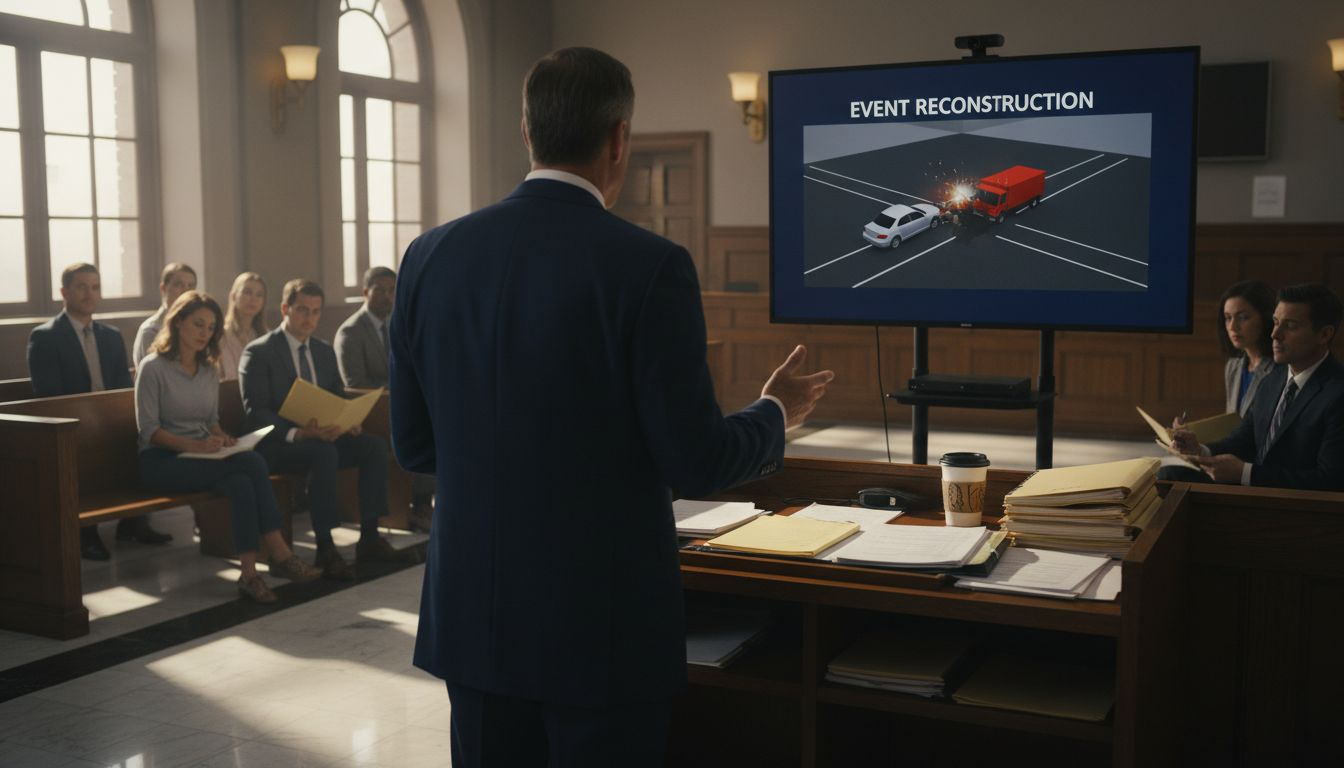
Complex litigation often leaves jurors struggling to connect abstract testimony with the technical realities of a case. In settings where detail and clarity can shift the outcome, urban trial attorneys face mounting pressure to make critical evidence comprehensible and persuasive. Using computer-generated animations and forensic graphics, attorneys now transform intricate facts into engaging visuals that help juries grasp even the most challenging scenarios, driving better understanding and stronger courtroom impact.
Defining Trial Graphics and Their Crucial Role
Trial graphics represent strategic visual communication techniques designed to transform complex legal narratives into compelling, understandable presentations within courtroom environments. These sophisticated multimedia tools help attorneys translate intricate technical, scientific, or procedural details into clear, engaging visual representations that resonate with jurors and judges.
At their core, trial graphics encompass a range of visual technologies and design strategies, including:
Computer-generated animations depicting accident reconstructions
3D modeling of crime scenes or technical evidence
Digital timelines illustrating chronological event sequences
Interactive demonstrative exhibits that break down complicated information
Medical illustrations explaining anatomical injuries or medical procedures
Forensic animation has emerged as a particularly powerful tool in modern litigation. Computer-generated visual evidence helps juries comprehend complex events by transforming abstract testimony into tangible, easy-to-understand simulations. In landmark cases like the Delta 191 crash trial, these graphics have proven instrumental in helping jurors grasp nuanced technical details.
The effectiveness of trial graphics extends beyond mere visual appeal. Forensic animations provide reliable event reconstructions that can significantly influence jury perception and understanding. However, their admissibility hinges on rigorous validation and the precision of underlying data.
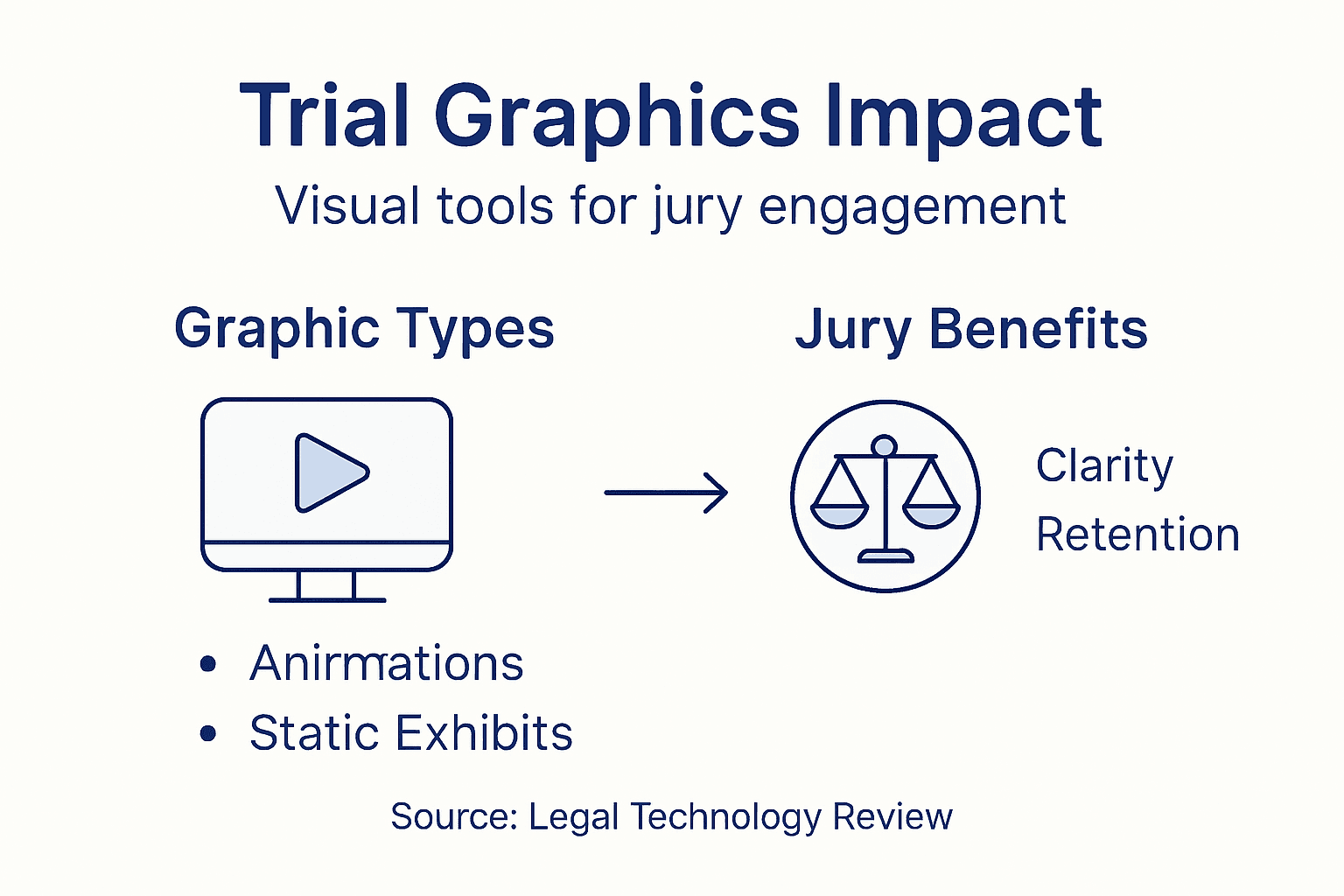
Pro tip: Collaborate closely with graphic specialists who understand both legal storytelling and technical visualization to create graphics that are scientifically accurate and legally compelling.
Types of Trial Graphics Used in Litigation
Litigation demands a sophisticated array of visual communication tools that transform complex legal scenarios into comprehensible narratives for judges and juries. Trial graphics represent a diverse toolkit of visual strategies designed to clarify intricate technical details, reconstruct events, and present evidence with maximum clarity and impact.
The primary types of trial graphics include:
Computer-generated animations depicting accident sequences
Static visual exhibits illustrating technical evidence
Medical illustrations explaining injury mechanisms
3D architectural reconstructions of crime scenes
Interactive digital timelines showing chronological event progressions
Forensic reconstructions demonstrating scientific analysis
Forensic animations have emerged as particularly powerful visual tools in modern litigation. These sophisticated graphics can be categorized into two primary approaches: demonstrative animations and scientifically-based event simulations. Demonstrative animations help illustrate witness testimony, while simulation graphics provide scientifically rigorous models of complex events like vehicle accidents or product malfunction scenarios.
Each type of trial graphic serves a unique purpose in legal storytelling. Static exhibits might provide snapshot evidence, while dynamic animations can walk jurors through intricate technical processes or accident reconstructions. The selection of appropriate graphics depends on case complexity, available evidence, and the specific narrative attorneys aim to communicate.

Here’s a side-by-side look at common types of trial graphics and their best-use scenarios:
Graphic Type | Typical Use Case | Ideal Audience |
Computer-generated Animation | Accident reconstruction | Jury with no technical background |
3D Model | Visualizing physical evidence | Judges assessing technical facts |
Medical Illustration | Explaining injury mechanisms | Jurors in personal injury cases |
Digital Timeline | Sequencing complex events | Jurors needing chronological clarity |
Interactive Exhibit | Demonstrating processes | Jury in technical or patent cases |
Pro tip: Consult with both graphic specialists and expert witnesses to ensure your trial graphics are not just visually compelling, but scientifically accurate and legally admissible.
How Visuals Influence Jury Decision-Making
Cognitive processing of visual evidence fundamentally transforms how jurors comprehend complex legal scenarios. Visual graphics serve as powerful cognitive bridges, translating abstract legal concepts into tangible, easily digestible representations that can dramatically shift jury understanding and perception of case details.
The psychological impact of visual evidence manifests through several critical mechanisms:
Enhanced information retention
Simplified complex narrative interpretation
Increased emotional engagement
Reduced cognitive load during evidence evaluation
Improved comprehension of technical details
Computer animations play a particularly nuanced role in jury persuasion. Courtroom visual presentations impact juror decision-making by providing contextual clarity that transforms abstract testimony into concrete, understandable scenarios. The effectiveness depends on multiple factors, including graphic quality, presentation style, and alignment with expert testimony.
Research indicates that well-designed visuals can significantly improve jury comprehension without compromising the fairness of legal proceedings. By breaking down intricate technical details into clear, structured visual narratives, attorneys can help jurors process information more efficiently, potentially leading to more informed and balanced verdicts.
This table summarizes how trial graphics can influence jury decision-making through various cognitive factors:
Impact Mechanism | Example Effect on Jury | Importance for Attorneys |
Enhanced Information Retention | Jurors remember key details | Improves long-term recall of evidence |
Emotional Engagement | Creates empathy or urgency | Can subtly shape verdict direction |
Reduced Cognitive Load | Simplifies technical explanations | Minimizes confusion in complex cases |
Contextual Clarity | Visualizes testimony scenarios | Aligns expert evidence with visuals |
Pro tip: Collaborate with professional graphic specialists who understand both legal storytelling and visual communication principles to create compelling, scientifically accurate trial graphics.
Legal Standards and Admissibility of Graphics
Digital evidence standards play a critical role in determining the admissibility of trial graphics, establishing rigorous criteria that ensure visual evidence maintains legal integrity and fairness. Courts systematically evaluate visual representations to prevent potentially misleading or prejudicial information from influencing jury perceptions.
The legal landscape for trial graphics involves several key considerations:
Demonstrative vs. substantive evidence classification
Scientific validity verification
Expert witness authentication
Technical accuracy assessment
Potential bias evaluation
Computer-generated graphics face distinct legal scrutiny depending on their intended purpose. Courtroom digital evidence requires meticulous validation to ensure authenticity and representational accuracy. Most jurisdictions apply either the Daubert or Frye standards, which demand comprehensive scientific validation before permitting visual evidence.
Typically, courts distinguish between two primary categories of visual evidence. Demonstrative graphics serve to illustrate witness testimony and face lower evidentiary barriers, while substantive graphics that directly represent scientific reconstructions must meet more stringent reliability standards. Attorneys must carefully navigate these nuanced legal requirements to effectively leverage visual evidence.
Pro tip: Consult forensic experts and legal technologists during graphic preparation to ensure your visual evidence meets the most rigorous scientific and legal standards.
Common Pitfalls and Best Practices for Attorneys
Effective trial graphics strategies require meticulous planning and sophisticated technical understanding beyond mere visual presentation. Attorneys must navigate complex technological and legal landscapes to transform complex case information into compelling, admissible visual narratives that enhance jury comprehension without compromising legal integrity.
Key pitfalls attorneys must carefully avoid include:
Overcomplicating visual representations
Using technically inaccurate graphics
Failing to authenticate digital evidence
Neglecting expert collaboration
Presenting potentially prejudicial visuals
Legal technology integration demands strategic approaches. Interdisciplinary collaboration ensures effective court presentations by establishing clear protocols for data verification, maintaining transparency, and anticipating potential technological challenges that might compromise evidence credibility.
Successful trial graphics require attorneys to balance technical sophistication with legal precision. This means working closely with forensic experts, technologists, and graphic specialists to create visuals that are scientifically accurate, legally admissible, and strategically compelling. The goal is not just to illustrate testimony but to illuminate complex scenarios in ways that resonate with jurors’ understanding.
Pro tip: Develop a comprehensive review process involving legal, technical, and scientific experts to validate your trial graphics before courtroom presentation.
Elevate Your Trial Graphics for Maximum Jury Impact
Creating trial graphics that are both scientifically accurate and legally compelling is a crucial challenge addressed in the article. The need to simplify complex technical details while engaging jurors emotionally requires expert collaboration and precise technology. Without the right support, attorneys risk overcomplicating visuals or failing to authenticate evidence, which can undermine case outcomes. At TrialTech Support LLC, we understand that every trial demands meticulous planning and seamless execution of visual presentations.
Our tailored services include:
Skilled graphics specialists who translate complex narratives into clear, persuasive visuals
Experienced “hot seat” presentation technicians who manage live courtroom technology
Onsite IT+ support to maintain flawless operation during critical moments
Take control of your trial narrative and transform jury engagement with professional trial technology services. Discover how TrialTech Support delivers customized solutions that align with your litigation goals through accurate and impactful trial graphics. Visit us now to learn more and schedule a consultation to ensure your visuals withstand legal scrutiny and enhance jury understanding.
Frequently Asked Questions
What are trial graphics?
Trial graphics are visual communication tools used in courtrooms to present complex legal narratives in an engaging and understandable manner. They include computer-generated animations, 3D models, timelines, and medical illustrations, helping attorneys convey intricate details effectively.
How do trial graphics influence jury decision-making?
Trial graphics enhance jury comprehension by simplifying complex narratives, improving information retention, and increasing emotional engagement. Visual evidence helps jurors contextualize abstract legal concepts, potentially leading to more informed verdicts.
What types of trial graphics are commonly used in litigation?
Common types of trial graphics include computer-generated animations for accident reconstructions, 3D models of crime scenes, medical illustrations explaining injuries, digital timelines for event sequencing, and interactive exhibits for demonstrating processes.
What legal standards must trial graphics meet to be admissible in court?
Trial graphics must adhere to legal standards ensuring scientific validity, expert witness authentication, and technical accuracy. They are evaluated according to the evidentiary requirements of denial categories, like demonstrative versus substantive evidence, to ensure they do not mislead jurors.

Comments