
Trial Timelines: Managing Pretrial Strategy and Logistics
- David Nguyen
- Feb 12
- 7 min read

Every trial lawyer knows the pressure that comes with tracking countless deadlines as a complex case moves from initial filing through post-trial motions. Trial timelines shape how every American legal proceeding unfolds, establishing a structured framework that is both a lifeline and a potential pitfall. By mastering the unique phases, procedural rules, and key milestones embedded in these trial timelines, attorneys can transform chaos into methodical case progress and safeguard their litigation strategy.
Defining Trial Timelines in Litigation
Trial timelines represent the structured progression of legal proceedings from initial filing through final resolution, governing how cases move through the judicial system. These timelines are critically important because they establish a clear roadmap for litigation, ensuring that each phase occurs within legally mandated time constraints.
Understanding trial timelines involves recognizing the key stages of litigation, which typically include:
Pleading Stage: Initial document filing and formal case introduction
Discovery Phase: Evidence gathering and information exchange
Motions Period: Legal arguments and procedural challenges
Trial Preparation: Final case strategy development
Trial Proceedings: Actual courtroom presentations
The federal court litigation process follows specific statutory guidelines that dictate precise deadlines for each litigation stage. These timelines are not arbitrary but carefully designed to promote judicial efficiency and ensure fair, timely case resolution.
Each stage of litigation has unique procedural requirements and time limitations. Attorneys must strategically navigate these timelines, understanding that missing critical deadlines can potentially compromise their entire case strategy. Successful litigation management demands meticulous tracking and proactive scheduling.
Effective trial timeline management transforms complex legal proceedings from potential chaos into a structured, predictable process.
Tracking Mechanisms are essential for managing these intricate timelines. Legal teams typically utilize:
Digital case management software
Comprehensive litigation calendars
Deadline tracking systems
Regular status review meetings
The complexity of trial timelines varies significantly depending on case type, jurisdiction, and specific court rules. Some cases may progress rapidly, while others could extend over multiple years, making flexible yet disciplined timeline management crucial.
Pro tip: Create a comprehensive litigation timeline spreadsheet with color-coded indicators for each critical deadline to maintain precise tracking and prevent missed opportunities.
Core Phases and Milestones Explained
Litigation is a complex process involving multiple strategic phases, each with distinct requirements and critical milestones that shape the trajectory of a legal case. Understanding these phases is essential for attorneys to effectively navigate the judicial system and develop comprehensive legal strategies.
The court procedural phases typically unfold in a structured sequence, each with specific objectives and legal requirements:
Pleading Phase: Initial formal statements of claims and defenses
Discovery Stage: Comprehensive evidence gathering and information exchange
Pretrial Motions: Legal arguments to resolve procedural or substantive issues
Jury Selection: Identifying and screening potential trial participants
Trial Proceedings: Presenting evidence and arguments before the court
Verdict and Judgment: Final legal determination of the case
Each phase contains multiple critical milestones that legal teams must carefully manage. These milestones are not merely procedural checkpoints but strategic opportunities to shape case outcomes.
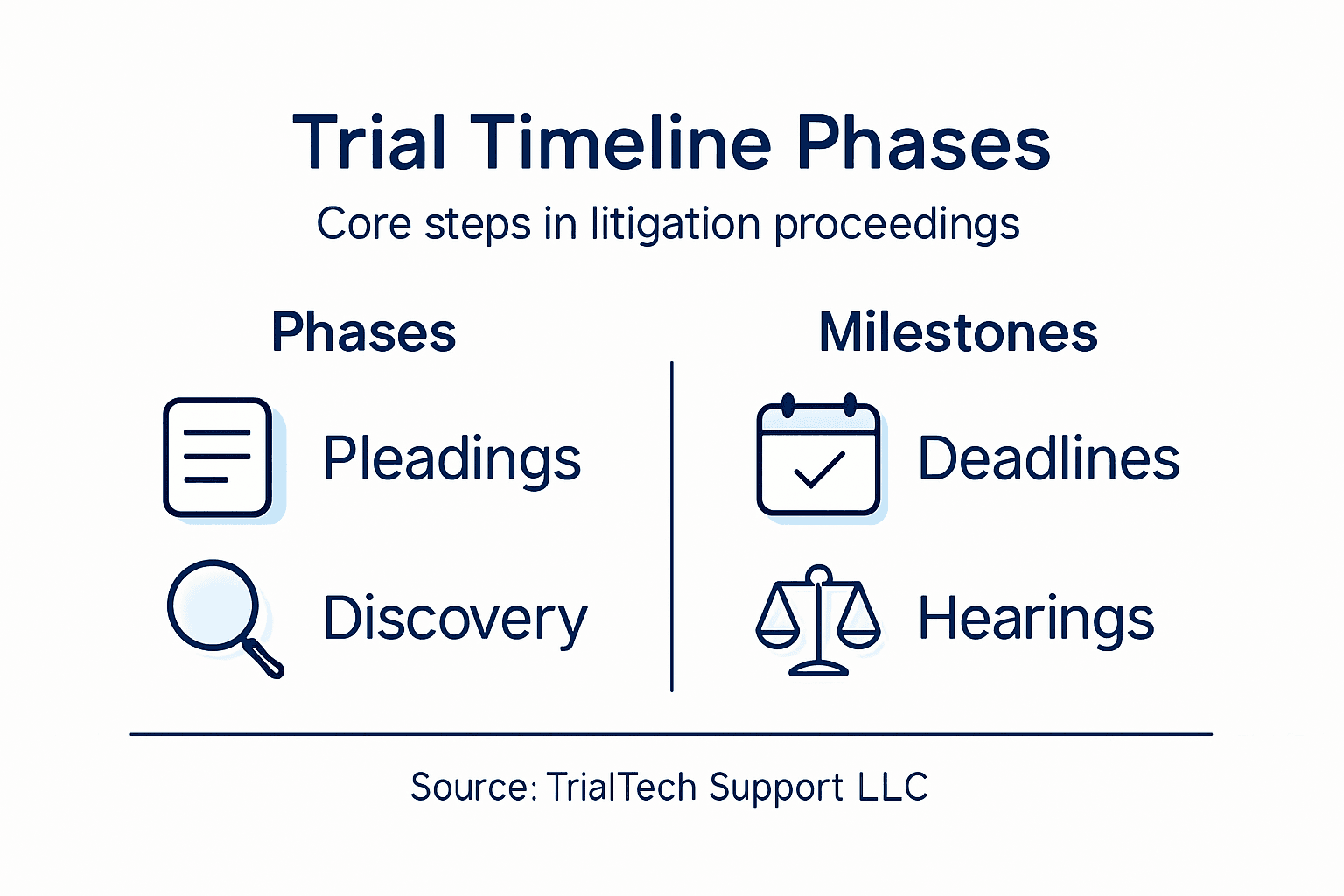
Here’s a summary of major litigation phases and their typical objectives:
Phase | Primary Objective | Common Challenges |
Pleading | Outline claims and defenses | Ensuring compliance with rules |
Discovery | Gather evidence and info | Managing large data sets |
Motions | Address legal issues | Tight deadlines |
Trial Preparation | Develop courtroom strategy | Coordinating expert input |
Trial Proceedings | Present case to court | Maintaining trial focus |
Verdict and Judgment | Reach case resolution | Responding to post-trial motions |
Successful litigation requires treating each procedural milestone as a strategic inflection point, not just an administrative requirement.
The litigation timeline demands precise tracking and proactive management. Courts impose strict deadlines for:
Filing initial complaints
Completing discovery processes
Submitting pretrial motions
Conducting expert witness depositions
Finalizing trial preparation documents
Milestones are governed by court-established procedural rules that define specific timeframes and requirements. Missing these deadlines can result in significant legal consequences, potentially compromising an entire case strategy.
Legal teams must remain adaptable, recognizing that while these phases provide a standard framework, each case presents unique complexities that may require strategic adjustments. Successful navigation demands both rigorous adherence to procedural rules and creative legal thinking.
Pro tip: Develop a comprehensive litigation timeline spreadsheet with color-coded milestone tracking to ensure no critical deadlines are overlooked during case progression.
Types of Timelines and Case Variations
Trial timelines are not uniform across different legal contexts, with each case type presenting unique scheduling challenges and procedural requirements. Understanding these variations is crucial for legal professionals to develop appropriate strategic approaches and manage client expectations effectively.
The statutory time limits for different case types reveal significant complexity in legal scheduling. Criminal and civil litigation, for instance, operate under distinctly different timeline frameworks:
Criminal Cases: Strict speedy trial mandates
Civil Litigation: More flexible procedural schedules
Appeals: Accelerated review timelines
Complex Litigation: Extended discovery and preparation periods
Specialized Matters: Unique jurisdictional time constraints
Criminal proceedings have particularly rigorous timeline requirements. Federal law mandates specific time frames for indictments, preliminary hearings, and trial commencement, designed to protect defendants’ constitutional rights and ensure judicial efficiency.
Legal timelines are not mere administrative details, but strategic instruments that can significantly influence case outcomes.
The complexity of trial timelines becomes even more pronounced when considering specialized legal scenarios:
Injunction proceedings
Class action lawsuits
Federal versus state court jurisdictions
Appellate review processes
Complex multi-party litigation
Litigation scheduling strategies must remain adaptable, recognizing that each case presents unique temporal challenges. Factors influencing timeline variations include case complexity, jurisdictional rules, judicial caseloads, and specific statutory requirements.

Successful legal teams develop nuanced approaches that anticipate potential timeline variations, building flexibility into their case management strategies. This requires continuous monitoring of procedural developments and proactive communication with courts and opposing counsel.
A quick comparison of timeline approaches across case types:
Case Type | Timeline Structure | Key Scheduling Feature |
Criminal | Strict deadlines | Speedy trial mandates by statute |
Civil | Flexible scheduling | Court discretion influences timetable |
Appeals | Accelerated review | Short briefing deadlines |
Complex Litigation | Extended preparation | Multiple parties and lengthy discovery |
Pro tip: Maintain a dynamic case timeline template that can be quickly adjusted to accommodate jurisdiction-specific and case-type variations.
Legal Standards and Court-Specific Requirements
Navigating the complex landscape of legal standards requires a sophisticated understanding of jurisdiction-specific requirements and federal regulations. Attorneys must develop meticulous strategies that account for the nuanced procedural frameworks governing different court systems and case types.
The federal legal time limits establish critical benchmarks for judicial proceedings, particularly in criminal cases. These statutory guidelines create a structured approach to managing litigation timelines:
Federal Court Standards: Strict procedural compliance
State Court Variations: Jurisdiction-specific local rules
Criminal Proceedings: Speedy trial mandates
Civil Litigation: Flexible scheduling frameworks
Appellate Review: Specialized timeline requirements
Court-specific requirements demand extraordinary attention to detail. Each jurisdiction maintains unique local rules that can significantly impact case progression, requiring lawyers to develop jurisdiction-sensitive approaches.
Legal compliance is not about following rules, but understanding the strategic implications of procedural nuances.
Key elements of court-specific requirements include:
Filing deadline specifications
Motion submission protocols
Evidence disclosure timelines
Continuance request procedures
Service of process regulations
The court local rule compliance represents a critical aspect of litigation management. Attorneys must continuously monitor jurisdictional updates, recognizing that procedural rules can vary dramatically between federal and state courts, and even between different judicial districts.
Successful legal professionals develop adaptive strategies that anticipate potential procedural challenges, maintaining flexibility while ensuring strict adherence to applicable standards. This approach requires continuous learning and proactive case management.
Pro tip: Develop a comprehensive jurisdiction-specific checklist that tracks unique local court requirements and updates them quarterly to ensure ongoing procedural compliance.
Common Pitfalls and Compliance Challenges
Legal professionals encounter numerous complex challenges when managing trial timelines, with potential pitfalls that can significantly derail case strategies and judicial proceedings. Understanding these risks is crucial for maintaining effective litigation management and avoiding potentially costly procedural mistakes.
The trial timeline compliance challenges present multiple critical risk areas for attorneys, including:
Missed Deadlines: Potentially case-destroying errors
Improper Continuance Requests: Risking judicial sanctions
Communication Failures: Miscommunication with opposing counsel
Service of Process Complications: Technical procedural violations
Discovery Schedule Mismanagement: Inefficient evidence exchange
Procedural missteps can emerge from various sources, creating complex compliance challenges that demand meticulous attention. Understanding these potential pitfalls requires a comprehensive approach to case management and procedural awareness.
Compliance is not about perfection, but about demonstrating consistent, good-faith effort to follow court rules and procedural requirements.
Key compliance challenges attorneys frequently encounter include:
Navigating complex jurisdictional requirements
Managing overlapping court deadlines
Coordinating multiple discovery timelines
Handling unexpected procedural complications
Maintaining clear communication channels
The strategic trial timeline management requires a proactive approach to identifying and mitigating potential risks. Legal teams must develop robust systems for tracking deadlines, anticipating potential challenges, and maintaining flexible case management strategies.
Successful litigation demands a holistic understanding of procedural complexities, combining technological tools, meticulous documentation, and strategic foresight to navigate the intricate landscape of court requirements.
Pro tip: Implement a comprehensive digital tracking system with automated deadline alerts and redundant reminder mechanisms to minimize the risk of procedural oversights.
Master Your Trial Timeline with Expert Technology and Support
Managing complex trial timelines requires precision and flawless execution from pretrial strategy through courtroom presentation. This article highlights challenges like strict deadline compliance, discovery scheduling, and the need for adaptable case management—all critical points where strategic use of trial technology can make a decisive difference. When every milestone becomes a strategic inflection point, reliable support in managing logistics and technical details becomes indispensable.
At TrialTech Support LLC, we specialize in delivering customized trial technology services that align perfectly with the demands described here. From expert graphics specialists and skilled presentation technicians to setting up fully equipped war rooms and providing Onsite IT+ support, our team ensures smooth, compliant litigation management tailored to your timeline’s unique complexities. Discover how our solutions can help you maintain flawless control over your trial phases by visiting TrialTech Support and explore the benefits of our comprehensive pretrial logistics management and courtroom presentation expertise.
Ready to turn intricate timelines into streamlined victories? Elevate your trial strategy today with trusted technology partners. Visit TrialTech Support, learn more about our pretrial logistics services, and secure the expert assistance that keeps your case on track.
Frequently Asked Questions
What is a trial timeline in litigation?
Trial timelines are structured schedules that outline the progression of legal proceedings from initial filing through final resolution, providing a roadmap for each phase of litigation.
What are the key phases involved in trial timelines?
Key phases typically include the pleading stage, discovery phase, motions period, trial preparation, and trial proceedings, each with specific objectives and procedural requirements.
How can legal teams effectively manage trial timelines?
Legal teams can manage trial timelines by utilizing digital case management software, maintaining comprehensive litigation calendars, tracking deadlines, and holding regular status review meetings.
What are common challenges associated with managing trial timelines?
Common challenges include missed deadlines, improper continuance requests, communication failures with opposing counsel, and mismanagement of discovery schedules, all of which can impact case strategy and outcomes.